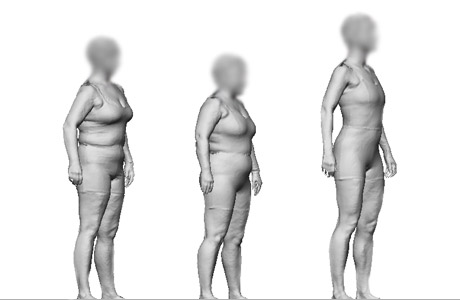
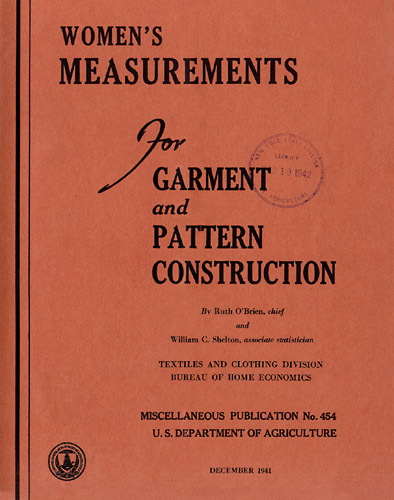
BODY SCAN TECHNOLOGY will help apparel firms improve the fit of their mass-produced clothing by providing valuable measurement data on consumer populations. Most systems for sizing ready-to-wear garments have been based on very limited information. Before new body scanner technology made anthropometric (body-measurement) studies affordable, many sizing systems were based on a traditional survey of the civilian population conducted in 1941 that is not accurate for today's body shapes.
In the past, apparel firms have not had anthropometric data, and therefore based many decisions about sizing on experimentation and subsequent feedback from their customers. This is not a very effective system for gathering data, as most consumers make decisions about garment fit at home or in the fitting room and do not communicate their experiences reliably or at all.
Few traditional anthropometric surveys were conducted because of the high labor costs associated with measuring large numbers of people with traditional tools. Body scanners have changed this. Apparel companies will benefit from several anthropometric studies that have scanned or are currently scanning representative groups of people from the population. The goal of these studies is to gain a better understanding of the current human sizes and shapes in order to develop sizing systems that fit most of the population.
The CAESAR study, an international anthropometric study conducted in the United States, the Netherlands, and Italy, was funded by the automotive, airline, and apparel industries and its data is being used in the design of many products. The Textile and Clothing Technology Corporation, [TC]2, organized a consortium of university and industry partners to collect 12,000 scans of men and women in 50 locations in the United States to create a database of civilian anthropometric data for the apparel industry. The data from this study, called SizeUSA, is widely used by apparel companies to help improve their sizing systems.